City urges residents to help tackle invasive ground cover
24 June 2025
The City’s Recreation and Parks Department is calling on residents across the metro to assist in the control and containment of Hedera spp (specifically Hedera canariensis and Hedera helix), commonly known as English Ivy or Ivy – a creeping and climbing invasive plant that poses a serious threat to the local environment.
Originally introduced to South Africa as a groundcover and ornamental climber, this flowering species from the Araliaceae family is native to Europe.
However, in Cape Town, its rapid spread has made it a growing problem in both public and private spaces.
The City is actively managing Ivy infestations in public spaces, but community awareness and action remain critical to ensuring successful control.
The Ivy is listed as a Category 3 invasive species under the National Environmental Management: Biodiversity Act (NEMBA) (Act 10 of 2004) regulations and must be managed accordingly. In sensitive or riparian areas, its status escalates to Category 1b, requiring control.
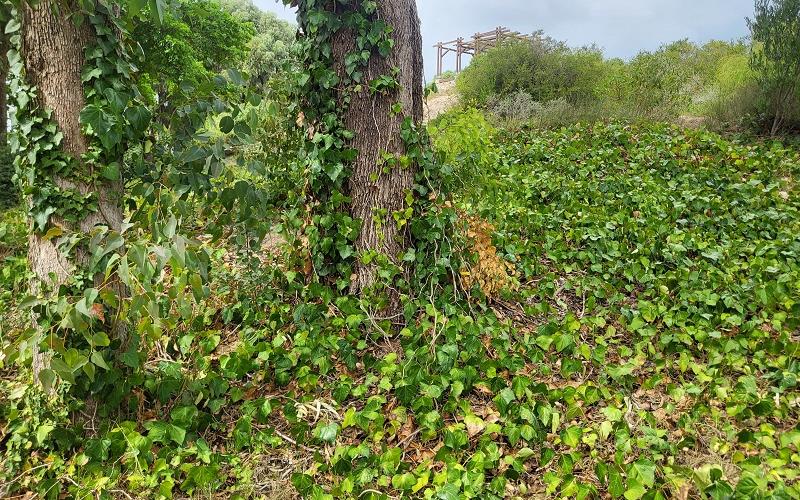
If left unmanaged, Ivy can smother and cause dieback, blocking the sunlight and subsequently adding weight to the distressed tree, often resulting in collapse; increase wind damage risk in open areas; outcompete and displace local plants, damaging biodiversity.
The City encourages residents to use the winter season – Ivy’s dormant phase – as a strategic opportunity to control or remove this plant:
Report overgrowth in public spaces by logging a service request via the City’s C3 system. This helps Recreation and Parks staff prioritise treatment
- Log sightings on the iNaturalist app and website to help the City track infestation
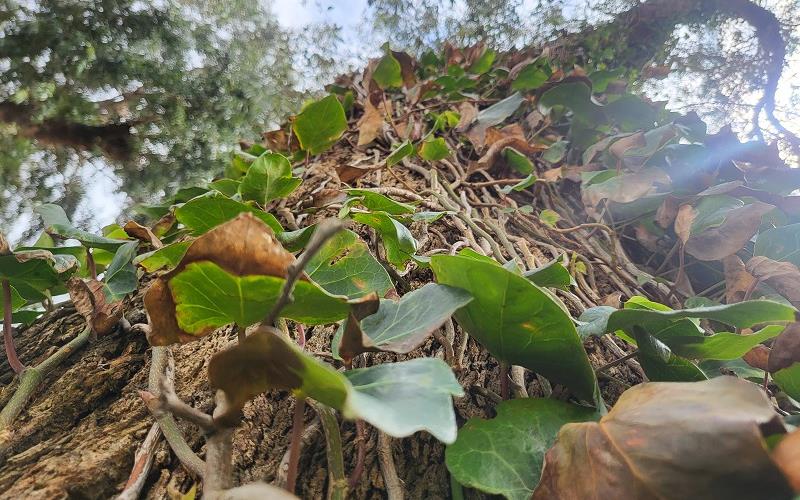
Remove Ivy safely at home:
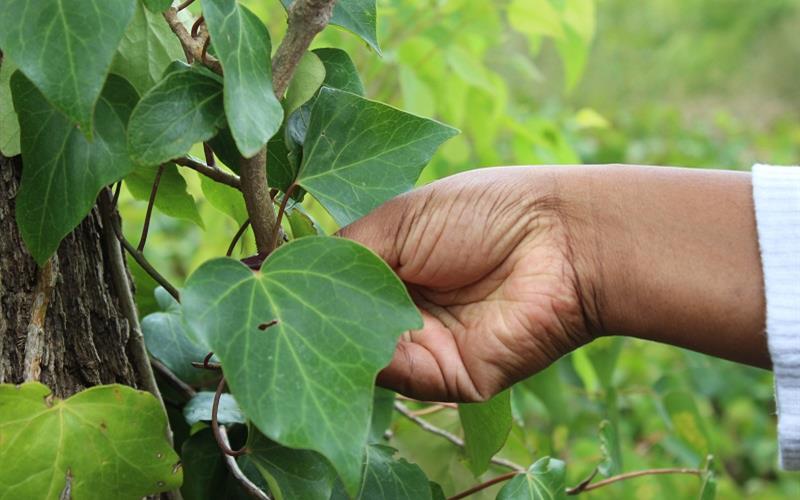
Manually pull out the Ivy stems and roots. The stems can be removed from the ground of a standing tree. Upper vines can be left to rot since they will die if they are not rooted.
Follow up regularly to remove any new growth.
Apply appropriate control methods to remove/control the infestation of Hedera spp. in persistent cases.
Dispose responsibly – never dump trimmings in natural areas where Ivy can re-root and spread. A good option is to dry the vine clippings on a tarp (plastic or canvas sheet) or on a paved surface, then shred them. Another method is to put the vines in black trash bags and leave them in the sun for several weeks, until they’ve ‘cooked’ enough to be non-viable.
 ‘Help the City beautify its parks and public open spaces by removing Ivy from your garden and reporting it where it grows in Public Open Spaces. We urge residents to take action this winter while the plant is dormant. If we all do our part, we can protect our urban forests and biodiversity. Let’s work together to stop the spread,’ said the City’s Mayoral Committee Member for Community Services and Health, Councillor Francine Higham.
End
Published by:
City of Cape Town, Media Office